


If you consider yourself a fan of modern Doctor Who, you’re likely to fit in one of three “Whovian” categories:
- Whovian A: “I loved it until David Tennant left!”
- Whovian B: Dips in and out of it, likes some episodes/doctors & dislikes others.
- Whovian C: Sticks with it and watches every episode regardless of whether they’re enjoying it or not.
I am an example of “Whovian C”, watching Doctor Who from a very early age, when Christopher Eccleston still had the Tardis keys. I have been dedicated to watching every single episode since, regardless of whether it or not. I suppose the wonderful and often difficult thing with this popular sci-fi drama is it’s changeability. The audience gets used to a particular actor playing the doctor and his/her companion or a show-runner’s style and then suddenly the doctor regenerates into someone new and fans are unsure whether the programme and title character is as good as it was before. It takes time to adjust to these drastic changes and for the viewer to warm to someone new.
With the exciting announcement that Russell T Davies will be taking over from Chris Chibnall and returning for a second tenure as Doctor Who’s show-runner next year, I wanted to take a closer look at each ‘new who’ show-runner and analyse what was strong or weak about their stint working on the programme.
Russell T Davies:

In 2005 the first series of welsh screenwriter, Russell T Davies’ revival of Doctor Who went down a treat with 10.8 Million fans, old and new tuning in. Davies creates a world which takes the places we recognise, sprinkles them with quirkiness and adds a dollop of sci-fi for good measure on top. Whether it’s a satellite with the big brother house on board or clothes store with mannikins that come to life, the worlds Davies creates are brilliantly imaginative.
Characters in his era are well written and embark on their own journey of development, even supporting characters such as Lynda in “Bad Wolf”, and Elton in “Love and Monsters” are well thought through and developed. Every character Davies writes feels just as important as each other.
The casting of Eccleston as the ninth Doctor was “fantastic”, his characterisation really struck a balance between the dark & cynical war torn Time Lord and cheesy mad man in a box. Then with David Tennant… need I say more? His performance as an emotional, energetic and passionate doctor connected with so many viewers and made him a fan favourite for many.
Russell constructed Tennant’s doctor as a romantic hero, whose lovers and companions cannot hold onto forever as he moves so quickly through time and space, with danger in his wake. This is demonstrated so clearly in the masterpiece of an episode “The Girl in the Fireplace”, written by Stephen Moffat in which Madame De Pompadour meets the doctor at various moments in her life, falls in love with her imaginary friend but the ending is bittersweet as the doctor goes to visit her for a final time but discovers too much time has passed and Madame De Pompadour has died. Davies hits us with another bittersweet blow to the stomach in Doomsday, showing Rose’s undeniable love for the doctor, that cannot be as she ends up marooned in a parallel world, that the doctor is unable to return to and we see the doctor’s outpour of grief as he says goodbye. I have to say though… the tenth doctor really loved a Hitchcock blonde!
Davies’ dialogue was genius, with some rib-cracking hilarious one liners, powerful scenes of emotion and all kinds of wibbly-wobbly-timey-wimey gobbledygook that made the time lord seem so clever.
His version of Doctor Who was family-friendly and yet contained elements of darkness that suggested something ominous ever presently lurking in the shadows of the universe. However Davies’ style could be criticised as being a bit too cheesy and rough around the edges, perhaps there were moments that weren’t serious enough… think farting green aliens, with long claws who live inside the skins of human beings… too much? Perhaps, but for me this is all part of Doctor Who’s charm and has been since it’s classic episodes that featured the most random types of monsters with an imperfect, DIY look that didn’t boast high production values.
I’d say my only main issue with Davies’ era, is that the narrative of his episodes (unless told in two separate parts) is too simple and repetitive, unfortunately, that’s the trade off in making a show that’s family friendly. There weren’t many twists in his era that I didn’t see coming or was shocked by, except in series finales. Stories would be resolved very quickly instead of giving the audience questions that can be answered in later episodes. Another slightly smaller issue is that Davies gave the tenth doctor an ego issue, spawned from the wide-spread popularity of Tennant’s doctor. He really milked Tennant’s departure from the show in over dramatised scenes, arguably there were also times that the Doctor and Rose’s relationship was also a bit too over the top and rammed down the audience’s throat.
I am a big fan of Russell T Davies and thoroughly enjoyed his first run as show runner during which I used to watch Doctor Who Confidential, on BBC Three – a behind the scenes look at each episode. This was a programme to which I owe a lot, as its what got me interested in film/tv making when I was growing up. I am looking forward to seeing Davies new era… television is a different playing field now to what it was then and with time lords now able to regenerate into any gender/sexuality I’m excited about to see how he takes Doctor Who to the next level to go up against strong competition in the streaming world of Disney Plus and Netflix.
Steven Moffat:

Scottish screenwriter and producer Steven Moffat, took on the job as Doctor Who Show-runner in 2010, having already written numerous episodes under Russell T Davies’ lead but decided to take a deeper dive into the darker, more complicated side of Sci-Fi and casting Matt Smith as a youthful and eccentric doctor, with an old professorial soul.
He introduced us to and developed some brilliant characters: Amy Pond, River Song, Clara Oswald and Bill Potts (to name a few) and made waves by casting Michelle Gomez as ‘Missy’- the first female regeneration of the Master.
One thing that strikes me the most about his tenure as show runner are his strong story arcs, that provide a through line for the series from cracks in the wall to the Pandorica and the identity of River Song. Just like his plot lines in Sherlock, they are very intricate and complex but everything is like a piece of a jigsaw puzzle in a much bigger picture, which spans at least an entire series but can have a ripple effect onto future series too. Immediately it feels much more connected than Davies approach but much harder to understand and no longer a programme that’s easy watching, with an overwhelming amount of storylines to follow and too much of the Sci-fi gobbledygook to the point its sometimes easy to get confused.
Moffat’s monsters such as Weeping Angels, are much darker than Davies’, they are often quite scary and not so family friendly but have been used as a worthy antagonist on some of the biggest blockbuster doctor who episodes I have watched. Such as in Angels Take Mahatten and the two parter where he not only brought back the creepy Mondasian Cybermen from classic who, but treated us by bringing back John Sim’s master alongside Missy, which was fun to watch and interesting to see their interaction.
I wasn’t convinced by his casting of Peter Capaldi in the 12th doctor’s debut episode. However, I soon began to warm to Capaldi’s grumpy scotsman doctor, who feels unwanted by Clara after his regeneration and has become someone who doesn’t like hugs and soppiness. I think he was brilliant at depicting a stubborn doctor, so consumed by grief and adamant that no one else will die under his watch.
The thing that Moffat has awesomely maintained is Doctor Who’s sense of humour, its still packed full of the one liners and quirky visual gags that make you laugh and warm to its characters. He has also proved on more than one occasion his ability to write the most powerful monologues on television, some examples including Matt Smith’s monologue in the Rings of Akthan, Capaldi’s speech about war in the Zygon invasion and powerful monologues in solo episode Heaven sent, which is regarded by many as one of the greatest episodes of doctor who all together. Here’s my favourite speech Steven penned:
“Hey! I’m going to be dead in a few hours, so before I go, let’s have this out, you and me, once and for all. Winning? Is that what you think it’s about? I’m not trying to win. I’m not doing this because I want to beat someone, or because I hate someone, or because, because I want to blame someone. It’s not because it’s fun and God knows it’s not because it’s easy. It’s not even because it works, because it hardly ever does. I do what I do, because it’s right! Because it’s decent! And above all, it’s kind. It’s just that. Just kind. If I run away today, good people will die. If I stand and fight, some of them might live. Maybe not many, maybe not for long. Hey, you know, maybe there’s no point in any of this at all, but it’s the best I can do, so I’m going to do it. And I will stand here doing it till it kills me. You’re going to die too, some day. How will that be? Have you thought about it? What would you die for? Who I am is where I stand. Where I stand, is where I fall. Stand with me. These people are terrified. Maybe we can help, a little. Why not, just at the end, just be kind?” – Doctor Who, Season 10, Episode 12, The Doctor Falls
Another thing about Moffat is that he excelled in writing Doctor Who that was unpredictable. He wasn’t precious about characters in the same way as Davies and in fact killed off a good many, therefore creating some great plot twists and forcing us to connect with Doctor Who on an emotional level, directly experiencing the Doctor’s grief with characters we have also got to know and love. This was very effective for storytelling but perhaps a device he used far too many times to pull on our heart strings, leaving us with very few satisfying happy endings.
Chris Chibnall:
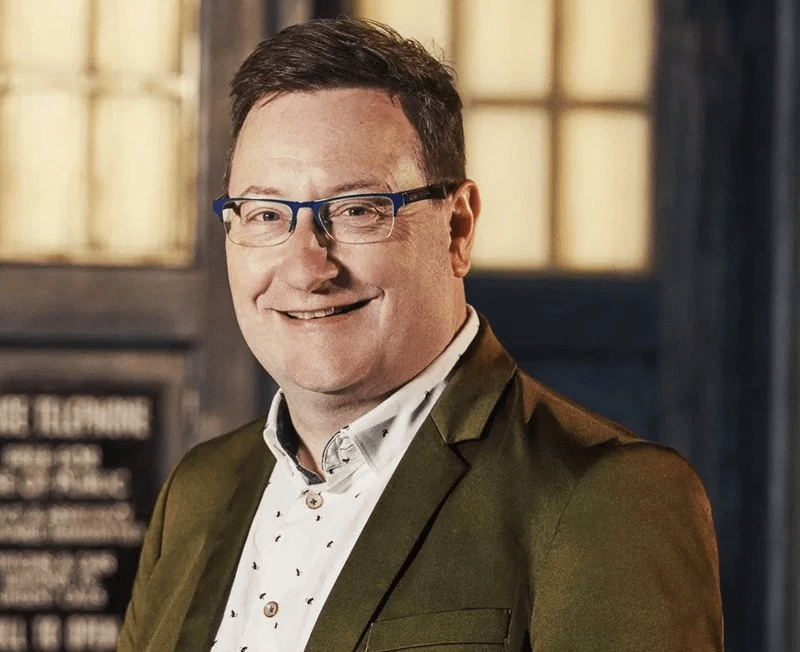
Prior to taking over Doctor Who as show-runner, Chris Chibnall has been best known for his mystery-crime drama Broadchurch, which ran for three series on ITV with an all star cast including former doctor, David Tennant and now academy award winning actor, Olivia Coleman. I had been obsessed with Broadchurch for a while when it was announced that Chibnall would be running Doctor Who, so as you can expect I was pretty excited!
First of all, I have to commend Chibnall on finally taking a leap of faith and casting Jodie Whittaker as the first female doctor (about time), which was met with mixed opinions from fans. I personally think Jodie Whittaker was an excellent casting choice with her high calibre acting performance full of energy and excitement. Chibnall made the doctor’s transition from man to woman seem very natural and didn’t feel the need to change the doctor’s draw too much attention to the change- in other words it doesn’t matter what gender the doctor is in his tenure, the doctor is just the doctor! However this was the first of many bold and drastic changes Chibnall made to the programme.
He introduced us to new companions: Ryan played by Tosin Cole, Yaz played by Mandip Gill and Graham played by much-loved tv presenter Bradley Walsh. While the casting of these actors was sublime, I feel there were moments in episodes where they didn’t seem to help the story that much. Ryan’s story of overcoming the challenges of dyspraxia was touching, but by having three companion characters to focus on, their own personal journeys were not explored in a satisfying depth. Though in the most recent “Flux” series, Chibnall gives us more backstory behind John Bishop’s character “Dan” and about Yaz’s love for the doctor- which I do fear has been squeezed in too late to explore in any actual detail. In my opinion Chibnall’s tenure has been one of trial and error. His vision for the programme was bold but by making so many changes to the programme fans know and love, the identity of the programme became unclear.
Certainly in the first series, the writing shows the doctor off as a bit of a do-gooder with a clear sense of morals. This decision was great for making the programme family-friendly once again but I definitely missed the Doctor’s underlaying darkness and sense of mystery. In most recent series, Chibnall allowed Jodie Whittaker to really come out of her shell in regards performance, facing more moral dilemmas and higher stakes therefore unleashing the sense of inner darkness and grief we know the character has.
The production value was significantly increased in his version of the show, with more CGI, drone shots and an artistic filmic quality such as the use of black and white in “Village of the Angels” which I view as one of Chibnall’s greatest episodes and way up there in the Doctor Who episode hall of fame!
Don’t get me wrong, it’s so great to see the BBC pumping money into this programme and making full use of the technology that’s available, but sometimes Chibnall’s episodes feel too polished, and this clashes with his ropey-looking villains. I was not convinced by Tim Shaw, the blue alien with teeth in his skin or the Piting, which looked like an animation from a children’s film and wasn’t a convincing threat.
That being said, he did create some pretty awesome villains too including: The Lone Cyberman, Swarm and The Grand Serpent. He even brought back some older foes like the Sontarans and The Master in a darker, more evil form.
I guess my point is that Chibnall’s characters and story arcs were inconsistent as he opened a massive can of worms with the Timeless Child plot line, changing the course of history for show by stating the doctor isn’t actually a Time Lord. I admire the tenacity Chibnall had to bring us such a big story, that’s so personal to the doctor’s character development, but there were just too many plot holes and knots left untied. A lot of his penultimate or mid-series episodes I find more exciting than his finales, which were a bit rushed, with resolutions that were too clear cut.
Finally when we get to Chibnall’s latest series “Flux”, I was so glad to see him go back to his Broadchurch roots telling one huge story, with one chapter in each episode. This series definitely had all the ingredients of a Marvel blockbuster and introduced us to some loveable new characters along the way. This change of strategy paid off and played to Chibnall’s strengths, I only which this is the way he structured the past two series.
To conclude, it was great to see Chibnall try new things and put his own stamp on the programme and there were some elements of his tenure I enjoyed immensely but due to the high production value, the amount of episodes was fewer than what Doctor Who fans would have liked to have seen and he threw perhaps too many new ideas at us such as: no Christmas day specials, changing the air day to a Sunday and a Dalek story per every New Years Day Episode. Some things just felt too formatted and totally changed the identity of the programme. In spite of this I am looking forward to next years specials as Jodie Whittaker and Chibnall make their exit from the show and I am really excited to see Chibnall’s next project, with all my fingers crossed for another series of Broadchurch…
 WILL HEXTALL
Leave a comment